

The sprinkler builder turned off our riser at nine a.m., and by noon, I was on the phone with a fire chief asking who was assigned as fire watch. I told him we had a security patrol on-site, the same one who manned our lobby daily, and I could hear the pause. He patiently explained that having a lobby guard check the door did not constitute fire watch, as the two roles are distinct and governed by different rules; if I didn’t implement proper compliance coverage, the building might need to be evacuated. I took it for granted that a guard was a guard.
That conversation with the fire chief was an eye-opener: while both roles involve uniform-wearing personnel monitoring a facility, relying on standard fire watch guards requires a completely dedicated focus that standard security protocols simply do not cover. Unlike standard security officers who divide their attention among access control, perimeter security, and general property checks, dedicated fire watch personnel concentrate solely on continuous hazard detection, route logging, and rapid emergency notification. Understanding this distinction is crucial for any property manager, as failing to deploy properly assigned guards can quickly lead to costly code violations or forced building shutdowns.
The central difference between a fire observer and a security officer.
The two roles are often confused because the same licensed officer may carry out either one, yet they serve entirely distinct purposes and are governed by separate rulebooks. Recognizing that split is what maintains a property’s compliance and safety.
Role of a security officer.
A security officer safeguards a property and those within it from potential human dangers. Their responsibilities include preventing theft, blocking unauthorized entry, patrolling areas, overseeing access points, managing occupancy levels, and addressing suspicious or disruptive conduct. A guard serves as a physical security asset, valued for their presence, ability to observe, and capacity to act when a person or situation presents a risk. The role is comprehensive and continuous, aligned with the property’s overall security requirements rather than specific threats or incidents.
Role of a fire observer.
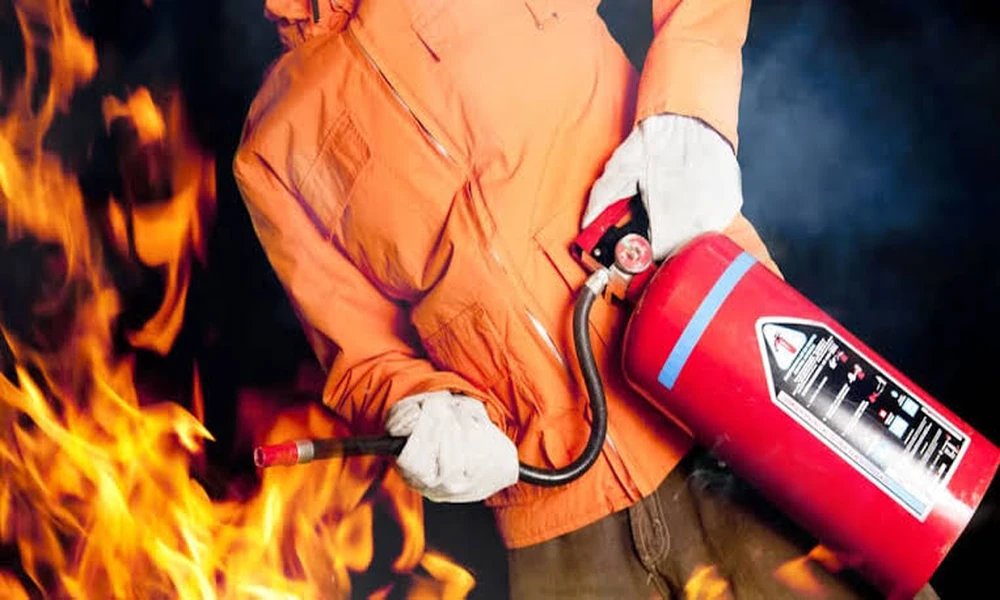
A fire observer is a specific fire-safety duty, not a broad security responsibility. A fire watch officer is stationed to constantly monitor a designated area for signs of fire, smoke, or potential ignition hazards during times when the building’s fire protection systems are disabled or when activities that pose a fire risk are being conducted. Their main responsibility is spotting potential dangers early and alerting authorities right away, which involves patrolling a specific route on regular schedules, observing for hazards, maintaining a time-stamped record, and contacting the fire department immediately if anything suspicious arises. This is a temporary assignment triggered by specific conditions and regulated by fire code, not by a security contract.
How to learn whom you require.
Choosing between a fire observer, a security officer, or using both depends on what specific threats you’re trying to prevent. Once you distinguish between a human-threat issue and a fire-hazard issue, the solution typically becomes obvious.
Match the jobs to the danger.
Recognize the issue you are trying to figure out. For issues involving theft, intrusion, access control, or crowd administration, a security guard is necessary. If the fire protection system is not operational, a hot work permit is in effect, or a fire marshal has mandated interim protection, you must assign a fire watch, and it must be staffed by someone specifically trained and committed to that duty.