
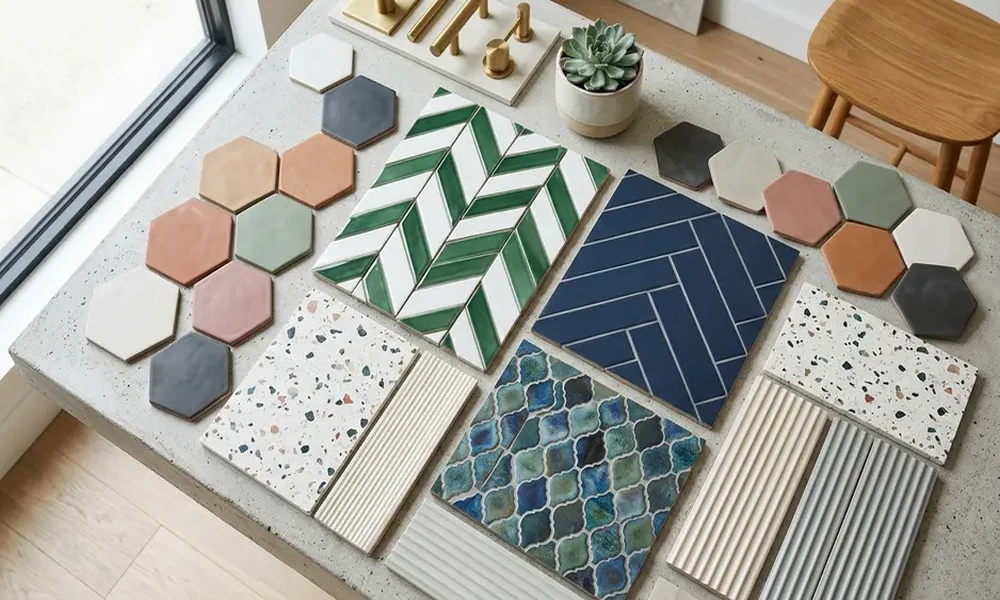
A single glance at a modern interior and you realize: ceramic tiles are no longer just a backdrop, they’re the statement. What’s behind this transformation? Texture and pattern. These two elements have the remarkable power to turn a basic wall or floor into an immersive visual experience.
Defining Texture and Pattern in Modern Ceramic Tiles
What Is Texture? Exploring Surface Feel and Visual Depth
Texture in ceramic tiles is more than what your fingers sense; it’s the interplay of light, shadow, and dimension on the tile’s surface. Whether it’s the soft tactility of a matte finish or the raised lines of a carved tile, texture brings depth, subtlety, and even warmth to a space. Tiles can mimic stone, wood, or concrete so convincingly that a quick touch is the only giveaway.
Understanding Pattern: Repetition, Rhythm, and Style
Pattern goes beyond mere decoration. It’s about how shapes, lines, and motifs repeat across the surface, creating rhythm and movement. A contemporary pattern might feature bold geometric lines, while a traditional design relies on floral motifs or classic checkerboards. Pattern isn’t just visual; it influences the style and ambiance of a room.
Comparing Matte vs. Glossy Textures
Visual Impact: Subtlety vs. Shine
The texture you choose sets the mood instantly. Matte tiles soak up light, delivering a velvety, understated look ideal for relaxing environments. Glossy tiles, on the other hand, reflect light for an eye-catching shine that amplifies brightness and draws attention. Imagine walking into a sunlit bathroom with glossy white subway tiles, the space feels luminous and expansive.
Practical Considerations: Maintenance and Durability
Shiny surfaces are notorious for showing every fingerprint and water droplet. While glossy tiles are easy to wipe clean, they need frequent upkeep to maintain that pristine shine. Matte tiles hide smudges better, making them a favorite for high-traffic areas. Both finishes are durable, but the choice depends on your lifestyle and tolerance for upkeep.
Best Uses: Where Matte or Glossy Tiles Excel
– Matte tiles: Kitchens, entryways, and living rooms where slip-resistance and muted elegance are desired.
– Glossy tiles: Bathrooms, accent walls, and backsplashes where brightness and a touch of luxury matter most.
Exploring Pattern Styles in Ceramic Tiles
Geometric vs. Organic Patterns: Modern Appeal vs. Natural Inspiration
Modern interiors often embrace geometric patterns, think hexagons, chevrons, and grids. Their crisp lines suit minimalist spaces. In contrast, organic patterns take inspiration from nature, offering flowing shapes, leafy motifs, and marbled effects that evoke calm and connection.
Traditional Motifs vs. Contemporary Designs
From Moroccan-inspired arabesques to mid-century modern abstractions, the pattern options are nearly endless. Traditional motifs bring history and heritage, grounding a space. Contemporary designs push boundaries, experimenting with asymmetry and bold contrasts.
Scale and Repetition: How Pattern Size Changes Perception
Small, tightly repeated patterns can make a large space feel intimate. Oversized motifs create drama, especially in compact rooms, where a single bold tile can become the focal point.
How Texture Influences Light and Space Perception
Texture Interaction with Natural and Artificial Light
Textured tiles interact with light in fascinating ways. Raised surfaces cast delicate shadows, adding richness by day and intrigue by night. A carved or 3D tile can make even a narrow hallway feel more dynamic and layered.
Creating Illusions of Space: Depth and Shadow Effects
A textured wall can visually expand a room, creating the illusion of added depth. Consider stone-look tiles in a small bathroom; their irregular surfaces fool the eye into sensing more space.
Texture as a Tactile Experience in Interior Design
It’s not only about looking good. Texture invites touch, encouraging interaction. A gently ribbed tile feels reassuring underfoot, while a smooth, glassy finish offers sleekness and coolness.
Pattern’s Role in Defining Style and Ambiance
Minimalist Spaces: When to Choose Subtle Patterns
In minimalist interiors, subtle patterns, like barely-there lines or faint marbling, add interest without overwhelming. They create movement while keeping the palette serene.
Bold Patterns as Focal Points
When a space needs a centerpiece, bold patterns are the answer. A single accent wall covered in vibrant, oversized motifs instantly becomes the room’s statement.
Combining Patterns: Harmonizing Complexity and Cohesion
Mixing patterns is an art. The key is balance: pair a striking geometric with a more subdued organic, or keep the color palette cohesive to avoid chaos.
Integrating Texture and Pattern: Comparative Case Studies
Designers often debate: should you prioritize pattern or texture? Think of two kitchens. One uses smooth tiles with intricate patterns, creating a refined, classic look. The other opts for plain tiles with a deeply textured, stone-like surface, bringing the outdoors in. Both approaches work, but the effect is entirely different.
Real-world examples abound. In commercial settings, textured, neutral tiles offer durability and disguise wear, while patterned tiles add branding or thematic flair. Residential projects might feature a mix, matte patterned tiles for living areas, glossy plain tiles for bathrooms, to achieve harmony.
Practical Tips for Selecting Texture and Pattern
– Room function matters: Moisture-prone spaces benefit from glossy, easy-to-clean finishes.
– Size and scale: Large patterns can overwhelm small rooms, while small-scale patterns might get lost in expansive spaces.
– Material coordination: Match tile textures and patterns with cabinetry, countertops, and fabric choices for a connected design.
– Maintenance: Glossy surfaces demand more cleaning; textured surfaces may require occasional deep scrubbing.
For those exploring the full spectrum of options, Club Ceramic tiles showcase a vast array of finishes, patterns, and colors, making it easier to find the right fit for any space.
Future Trends: Innovations in Texture and Pattern for Ceramic Tiles
Design is always evolving. Digital printing now enables custom patterns and photorealistic finishes. New carving techniques create deep, tactile surfaces never before possible. And as sustainability becomes a priority, expect more recycled materials and low-impact production methods built into tile design, making texture and pattern not just beautiful, but responsible.
Texture and pattern aren’t passing trends; they’re the creative heartbeat of modern tile design, shaping how we see and feel every room we enter.