

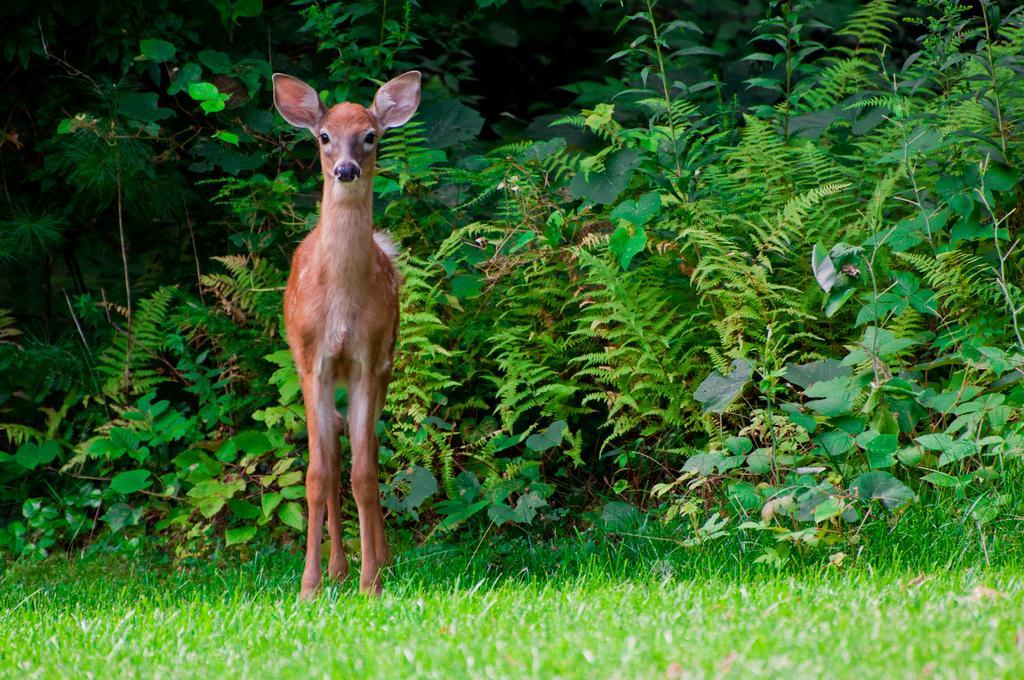
The Problem: Deer and Their Feeding Habits
Over the last century, the national white-tailed deer (Odocoileus virginianus) population has surged dramatically from half a million to a staggering 15 million. This population explosion has, unsurprisingly, led to a significant increase in the destruction of gardens in suburban and rural areas. With their natural habitats shrinking due to ongoing development, these graceful herbivores are increasingly encroaching upon suburban landscapes in search of sustenance. The extent of damage they inflict upon your garden depends on various factors, including the local deer population’s size, the available territory, other food sources, and the time of year.
Deer exhibit seasonal eating patterns, consuming annuals and herbaceous perennials during the spring and summer, and woody plants such as trees and shrubs during the winter.
Deer are creatures of habit, religiously following preferred pathways as they roam within their territories. Their past foraging experiences and nutritional needs influence which areas of your garden are most vulnerable. While understanding their predictable behaviors may offer some solace, the battle against deer is often a brief victory. What one deer may dismiss as unappetizing, another may readily devour.
Below, we offer a range of tips and tactics to aid you in tackling the deer problem in your garden. Feel free to experiment with several of these approaches to discover what works best for your unique situation.
The Remedy: Diverse Strategies for Garden Protection
Fences
The Warnell School of Forestry at the University of Georgia has conducted trials on the three-strand Gallagher® fence and found it to be highly effective even in areas with dense deer populations. This fence is installed in two layers, but it involves only three electrified strands and maintains a relatively low profile in your yard. Further information on this study can be found by following the Warnell link on this page.
Repellents
Deer repellents fall into two categories: taste-based and odor-based. Generally, repellents with disagreeable odors tend to be more effective in controlling damage compared to those that repel by taste. These repellents come in a range of intriguing odors, including sewage, putrid eggs, and garlic, to name a few. For your more fragrant plants, you might consider repellents made with essential oils like peppermint or rosemary. Repellents are particularly effective when used in a smaller area or sprayed directly on individual plants. Most repellents maintain their effectiveness for three to five weeks. To apply repellents, select a day when the temperature falls between 40 and 80 degrees Fahrenheit, and ensure you have 48 hours of dry weather ahead. Rotate among different types of repellents to prevent deer from growing accustomed to the scent.
While commercial repellents abound, some home remedies can also prove effective. For instance, a strongly scented soap like Irish Spring, when still in its wrapper, can be hung from a tree or staked 30 inches above the ground. Use one bar every ten feet. Another option is to collect human hair from a local hair salon and place it in a mesh bag or an old pair of pantyhose. Position it in the same manner as the soap. It’s worth noting that some people find these home remedies less effective because deer are becoming increasingly sophisticated and may even be seen consuming the soap and other deterrents.
Landscaping with Deer-Resistant Plants
For gardeners, one of the most appealing strategies in the battle against deer is to experiment with deer-resistant plants. While no plant is entirely immune to deer grazing, some are consistently ignored, and others are deemed less preferred. However, it’s essential to bear in mind that when deer are particularly hungry, they may consume plants they would otherwise avoid. Moreover, deer’s preferences can vary by region, so it’s advisable to consult lists compiled specifically for your area. Lists of deer-resistant plants serve as an excellent starting point, providing an array of intriguing options for home gardeners.
Additional Strategies to Try at Home
- Familiarize yourself with the habits of your local deer population.
- Plant susceptible plants closest to your home.
- Surround preferred deer plants with deer-resistant species to camouflage the more appealing options.
- Cultivate a diverse garden to ensure there’s still something left for enjoyment if deer target a few varieties.
- Bear in mind that fertilized plants tend to be more susceptible to deer damage, as they contain tender new growth.
- Young plants are often more vulnerable than their older
In conclusion, safeguarding your garden against the relentless appetites of deer demands a strategic approach that combines various tactics and methods. With the white-tailed deer population on the rise and their natural territories shrinking, it’s crucial for homeowners to adapt and protect their cherished gardens. Whether through the installation of effective deer fences, the careful application of repellents, or the thoughtful selection of deer-resistant plants, homeowners have a range of tools at their disposal. By understanding the habits of local deer populations and employing these diverse strategies, you can strike a balance that allows both your garden and these elegant herbivores to coexist harmoniously. Moreover, community efforts for responsible deer population management can prove to be the most effective long-term solution. So, while the battle against deer may be ongoing, it is a battle that can be won with knowledge, persistence, and a touch of creativity. Your garden, in all its blooming glory, will thank you for your efforts.